





Home Gym Design Mistakes That Cost Thousands: Lessons From Real Gym Owners
Share
Building a home gym should be an investment in your health, not a financial disaster. Yet thousands of fitness enthusiasts make costly design mistakes that drain their budgets and leave them with unusable equipment. After analyzing real stories from gym owners who've learned these lessons the hard way, here are the most expensive mistakes you need to avoid.
What are the most expensive home gym design mistakes?
The costliest home gym mistakes include buying equipment without measuring spaces ($2,000-5,000 in returns/exchanges), purchasing new equipment instead of remanufactured options (overspending by 50-70%), and poor flooring choices that require complete replacement ($1,500-3,000). Here's how to avoid these budget-busting errors:
Mistake #1: Not Measuring Your Space Properly
Real Story: Sarah from Dallas spent $4,200 on a commercial elliptical that wouldn't fit through her basement door. The return shipping alone cost $400, plus a 15% restocking fee.
The Fix: Always measure three dimensions:
- Equipment footprint (length × width)
- Ceiling height (add 2 feet clearance for overhead movements)
- Doorway dimensions for delivery
- Electrical outlet locations
Mistake #2: Buying New When Remanufactured Offers Better Value
Mike from Austin learned this lesson after spending $6,800 on a new commercial treadmill. Six months later, he discovered he could have bought the same model remanufactured for $2,400 – saving over $4,000.
The Reality Check: Commercial-grade remanufactured equipment delivers the same performance at 50-70% less cost. Our Life Fitness CLST Integrity Series Treadmill provides the same durability as new units but at $2,195 instead of $6,000+.
Mistake #3: Choosing the Wrong Flooring
Jennifer spent $2,800 on beautiful hardwood flooring for her home gym, only to watch it get destroyed by dropped weights within three months. The replacement cost her another $3,100.
Smart Flooring Choices:
- Rubber mats: $2-4 per sq ft, excellent for weight areas
- Interlocking foam: $1-2 per sq ft, good for cardio zones
- Vinyl planks: $3-5 per sq ft, moisture-resistant
- Avoid: Hardwood, carpet, or standard laminate
How do poor equipment choices waste money?
Wrong equipment selections cost homeowners $1,000-5,000 annually through unused machines, frequent repairs, and premature replacements. The key is prioritizing versatile, commercial-grade equipment over multiple single-function machines.
Mistake #4: Buying Too Much, Too Fast
Tom's story is painfully common: He spent $12,000 in one month building his "dream gym," only to use 30% of the equipment regularly. The unused machines collect dust while taking up valuable space.
The Smart Approach:
- Start with basics: squat rack, bench, barbell, plates
- Add cardio equipment based on actual usage patterns
- Wait 3-6 months before expanding
- Choose multi-function over single-purpose equipment
Mistake #5: Ignoring Power Requirements
Lisa discovered her dream Precor EFX 835 Total Body Elliptical needed a dedicated 20-amp circuit. The electrical work cost an unexpected $1,200.
Power Planning Essentials:
- Check amp requirements before purchasing
- Plan for multiple outlets if buying several machines
- Factor electrical costs into your budget
- Consider energy efficiency ratings
What flooring mistakes destroy budgets?
Flooring failures account for 25% of home gym renovation disasters, with replacement costs ranging from $1,500-4,000. The biggest mistake is choosing materials based on aesthetics rather than functionality and durability.
| Flooring Type | Initial Cost | Durability | Replacement Risk |
|---|---|---|---|
| Rubber Mats | $2-4/sq ft | 10+ years | Low |
| Hardwood | $8-12/sq ft | 1-2 years | Very High |
How can smart equipment selection save money?
Strategic equipment choices can save 40-60% on initial costs and reduce long-term maintenance expenses by choosing commercial-grade remanufactured machines over consumer models. Focus on versatile pieces that serve multiple functions.
The Power of Multi-Function Equipment
Instead of buying separate cardio machines, consider versatile options like the Precor AMT-12 865 Adaptive Motion Trainer. This machine provides running, walking, climbing, and cross-training in one unit, replacing multiple pieces while saving space.
What ventilation mistakes cost the most?
Inadequate ventilation leads to humidity damage, mold issues, and equipment failure, costing homeowners $2,000-8,000 in repairs and replacements. Proper airflow isn't optional – it's essential for protecting your investment.
Ventilation Requirements:
- Install exhaust fans rated for room size
- Ensure 6-8 air changes per hour during workouts
- Add dehumidifiers in humid climates
- Position equipment away from direct airflow
Frequently Asked Questions
How much should I budget for home gym mistakes?
Plan an additional 15-20% contingency fund beyond your equipment budget. Most first-time gym builders encounter unexpected costs averaging $1,500-3,000, typically from flooring, electrical work, or space modifications.
Is it worth buying remanufactured equipment over new?
Absolutely. Remanufactured commercial equipment offers the same performance and warranty coverage as new units but costs 50-70% less. You get commercial durability at consumer prices, plus professional reconditioning ensures reliable operation.
What's the biggest money-wasting mistake in home gym design?
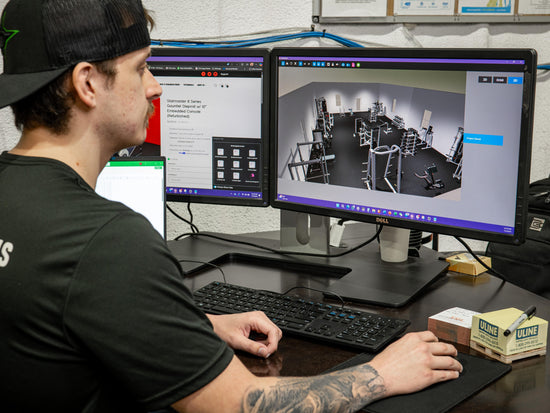
Buying equipment without a clear plan or proper measurements. This leads to returns, exchanges, unused equipment, and space inefficiency. Always design your layout first, then purchase equipment to fit the plan.
How can I avoid expensive flooring mistakes?
Choose function over form. Rubber flooring costs more upfront but lasts 10+ years and protects both your equipment and subfloor. Avoid hardwood, carpet, or standard laminate in weight areas – replacement costs far exceed initial savings.
Should I hire a professional for home gym design?
For spaces over $5,000 or complex layouts, professional consultation pays for itself by preventing costly mistakes. However, for basic setups under 200 square feet, careful planning and research can achieve excellent results.


