





Basement Home Gym Essentials: Space Planning and Equipment Selection for Underground Training
Share
What makes a basement ideal for a home gym?
Basements offer the perfect home gym environment with natural temperature control, privacy for intense workouts, and typically the largest available space in your home. The underground location provides excellent sound dampening and year-round climate stability. However, successful basement gyms require careful planning for ceiling height, moisture control, and proper equipment selection.
Unlike garage or spare room setups, basements present unique opportunities and challenges. The consistent cool temperature eliminates overheating during cardio sessions, while the concrete foundation provides unmatched stability for heavy equipment. Many fitness enthusiasts prefer the "cave-like" atmosphere that helps them focus without outdoor distractions.
How much ceiling height do you need for a basement gym?
A minimum ceiling height of 8 feet works for most strength training, but 9-10 feet is ideal for overhead movements and taller users. Olympic lifting requires at least 10 feet, while standard powerlifting can work with 8 feet. Most basement gyms have 7-8 foot ceilings, which limits exercise selection but doesn't eliminate effective training.
Ceiling Height Requirements by Exercise Type
- Powerlifting (bench, squat, deadlift): 8 feet minimum
- General strength training: 8-9 feet recommended
- Olympic lifting: 10+ feet required
- Bodyweight movements: 9-10 feet for pull-ups and burpees
- Cardio equipment: 8-9 feet for most machines
What basement modifications improve your gym space?
Essential modifications include moisture control through dehumidifiers, proper flooring installation, adequate lighting, and ventilation improvements. Most basements benefit from rubber flooring over concrete, LED lighting upgrades, and strategic equipment placement to maximize workflow.
Waterproofing should be your first priority. Even minor moisture issues can damage equipment and create unhealthy conditions. Install a quality dehumidifier rated for your square footage and maintain humidity levels between 30-50%.
Critical Basement Modifications
- Flooring: 3/8" to 3/4" rubber mats or interlocking tiles
- Lighting: LED shop lights or track lighting (minimum 50 lumens per square foot)
- Ventilation: Exhaust fan or improved HVAC circulation
- Electrical: Additional outlets for equipment (GFCI required)
- Storage: Wall-mounted racks and shelving systems
Which cardio equipment works best in basements?
Compact, low-impact cardio machines excel in basement environments. The StairMaster HIIT Air Bike provides intense full-body conditioning in minimal space, while commercial-grade treadmills like the Life Fitness CLST Integrity Series Treadmill offer superior durability and smooth operation.
Elliptical trainers offer excellent low-impact workouts perfect for joint-friendly cardio. The Precor EFX 835 Total Body Elliptical Trainer provides smooth operation and full-body engagement, while the advanced Precor EFX 883 Lower Body Elliptical Trainer features converging crossramp technology for varied muscle activation.
How do you plan basement gym layout efficiently?
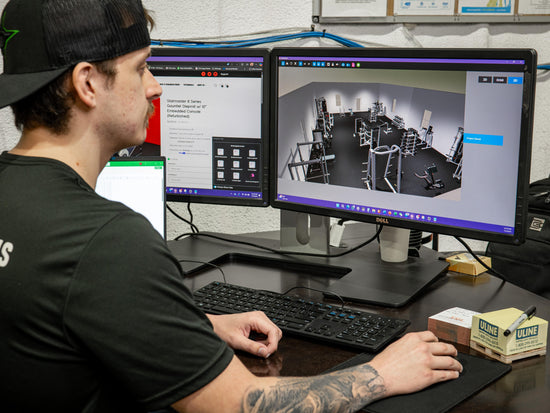
Start with a detailed floor plan marking support posts, utilities, and entry points. Create distinct zones for strength training, cardio, and stretching. Position your heaviest equipment against load-bearing walls and ensure 3-4 feet of clearance around each piece for safe movement.
| Zone | Equipment | Space Required |
|---|---|---|
| Strength | Rack, bench, weights | 8' x 8' minimum |
| Cardio | Treadmill, bike, elliptical | 6' x 3' per machine |
| Functional | Mats, accessories | 8' x 6' open area |
Space Planning Guidelines
- Traffic flow: Maintain clear pathways between equipment
- Emergency access: Keep exit routes unobstructed
- Utility clearance: Allow access to electrical panels and HVAC
- Support posts: Incorporate columns into your layout design
- Storage zones: Designate areas for accessories and maintenance supplies
What basement-specific safety considerations matter?
Basement gyms require enhanced safety measures including proper emergency lighting, carbon monoxide detectors, and emergency communication systems. Ensure your basement has two exit routes when possible and install battery-backup lighting systems for power outages.
Equipment stability becomes critical on concrete floors. Use equipment mats to prevent sliding and protect your foundation. Install mirrors strategically for form checking while avoiding areas where they could create safety hazards during emergency evacuation.
How does remanufactured equipment benefit basement gyms?
Remanufactured commercial equipment offers basement gym owners professional-grade durability at residential prices. Commercial machines feature heavier construction, better warranties, and superior longevity compared to consumer models. The stable basement environment protects these investments from weather-related wear.
Professional remanufacturing processes restore equipment to like-new condition while reducing costs by 40-60%. This allows basement gym owners to afford premium features like advanced consoles, smooth drive systems, and commercial-grade construction that withstands daily use.
Frequently Asked Questions
Do I need special permits for a basement home gym?
Most basement gyms don't require permits since you're not changing the structure. However, electrical work and major ventilation improvements may need permits. Check with your local building department before starting major modifications.
How do I control moisture in my basement gym?
Install a properly sized dehumidifier, ensure adequate ventilation, and address any water infiltration issues. Maintain humidity between 30-50% and use moisture-resistant flooring materials. Consider a bathroom exhaust fan for additional air circulation during intense workouts.
Can basement gyms damage my foundation?
Properly distributed gym equipment won't damage concrete foundations. Use equipment mats to protect floors and distribute weight evenly. Most residential foundations easily support standard home gym equipment loads when properly positioned.
What's the minimum square footage needed for a functional basement gym?
A basic strength-focused gym needs 100-150 square feet minimum. Adding cardio equipment requires 200-300 square feet. Full-featured basement gyms with multiple zones typically need 400+ square feet for optimal functionality and safety clearances.
How much does a complete basement gym setup cost?
Budget basement gyms start around $2,000-$3,000 for basic equipment and modifications. Mid-range setups with commercial-grade remanufactured equipment run $5,000-$8,000. Premium installations with extensive modifications can reach $15,000+ depending on space size and equipment selection.


