





10-Year Basement Gym Evolution: Planning Your Multi-Phase Home Gym Build
Share
How do you plan a 10-year basement gym evolution?
Planning a 10-year basement gym evolution requires starting with essentials in Phase 1 (power rack, barbell, plates), then systematically adding cardio equipment in Phase 2, specialty machines in Phase 3, and finishing touches in Phase 4. Budget $500-2,000 initially, then $1,000-3,000 per phase. The key is patience and strategic purchasing of quality remanufactured equipment that holds value.
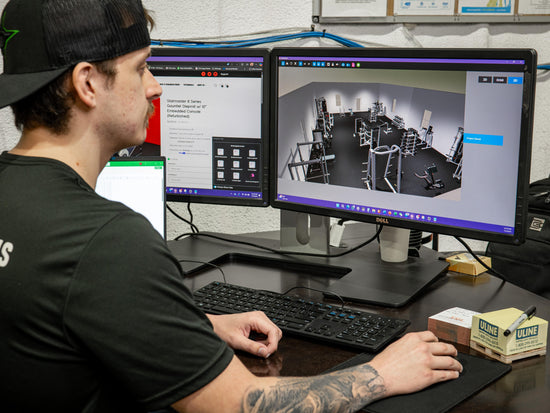
Building your dream basement gym doesn't happen overnight. Like the impressive transformation recently showcased in r/homegym, where one dedicated lifter took 10 years to create their ultimate training space, your basement gym evolution should be a carefully planned journey that grows with your experience and budget.
What should Phase 1 of your basement gym include?
Phase 1 establishes your foundation with essential strength training equipment costing $1,500-3,000 total.
Core Equipment for Year 1-2:
- Power rack or squat rack - Your gym's centerpiece ($400-800)
- Olympic barbell - 45lb standard bar ($150-300)
- Weight plates - Start with 300-400lbs total ($300-600)
- Adjustable bench - Flat/incline capability ($200-400)
- Basic flooring - Rubber mats or stall mats ($150-300)
When should you add cardio equipment in Phase 2?
Phase 2 typically happens in years 2-4 when your strength foundation is solid and you want to improve conditioning. Budget $2,000-4,000 for quality cardio machines.
Strategic Cardio Additions:
- Treadmill for steady-state cardio - The Life Fitness CLST Integrity Series Treadmill offers commercial durability at $2,195
- Air bike for HIIT training - The StairMaster HIIT Air Bike provides full-body conditioning for $1,195
- Elliptical for low-impact options - Perfect for recovery days and joint-friendly cardio
What specialty equipment defines Phase 3?
Phase 3 (years 4-7) focuses on specialized training tools and addressing weak points. This phase typically costs $2,000-5,000 and transforms your basic gym into a comprehensive training facility.
Advanced Equipment Options:
- Cable machine or functional trainer - Endless exercise variety
- Specialty bars - Safety squat bar, trap bar, cambered bar
- Dumbbells - Fixed weight set or adjustable system
- Unique cardio options - Arc trainers or AMT machines for variety
The Cybex 771AT Total Body Arc Trainer exemplifies Phase 3 equipment - offering unique movement patterns that complement traditional cardio for $3,095.
How do you complete your gym in Phase 4?
Phase 4 (years 7-10) adds finishing touches that create a true commercial gym experience. Budget $1,500-3,500 for these luxury additions.
Final Phase Elements:
- Professional flooring upgrade - Interlocking tiles or poured rubber
- Mirror installation - Full wall coverage for form checking
- Lighting improvements - Bright, even lighting
- Climate control - Ventilation and temperature management
- Audio/visual setup - Sound system and TV mounting
- Storage solutions - Organized plate storage and accessory racks
What's the total investment timeline?
| Phase | Years | Investment | Focus |
|---|---|---|---|
| Phase 1 | 1-2 | $1,500-3,000 | Strength Foundation |
| Phase 2 | 2-4 | $2,000-4,000 | Cardio Integration |
| Phase 3 | 4-7 | $2,000-5,000 | Specialization |
| Phase 4 | 7-10 | $1,500-3,500 | Finishing Touches |
Why choose remanufactured equipment for your evolution?
Remanufactured commercial equipment offers 60-70% savings compared to new, allowing you to build a higher-quality gym within your budget. Commercial-grade machines like the Precor EFX 835 Total Body Elliptical Trainer provide gym-quality performance at $2,595 versus $8,000+ new.
Remanufactured Benefits:
- Proven durability - Commercial equipment built for heavy use
- Better value retention - Quality equipment holds resale value
- Immediate availability - No 12-week wait times like new equipment
- Tested reliability - Refurbished to original specifications
Frequently Asked Questions
How much space do I need for a 10-year basement gym build?
Start with a minimum 200 square feet for Phase 1 essentials. A complete 10-year build ideally needs 400-600 square feet, with 8-foot ceilings for overhead movements and proper equipment clearance.
Should I buy everything at once or build gradually?
Build gradually over 3-4 phases. This allows you to learn what you actually use, avoid buyer's remorse, and spread costs over time. Many successful home gym owners regret rushing their initial purchases.
What's the biggest mistake in basement gym planning?
Underestimating electrical and HVAC needs. Plan for adequate lighting, ventilation, and electrical outlets early. These infrastructure improvements are harder to retrofit later in your evolution.
How do I maintain equipment over 10 years?
Schedule quarterly maintenance checks, keep equipment clean and lubricated, and address small issues before they become major problems. Quality remanufactured equipment typically needs minimal maintenance when properly cared for.
Is a 10-year basement gym evolution worth the investment?
Absolutely. A $7,000-15,500 total investment over 10 years costs less than 3-4 years of premium gym memberships, while providing 24/7 access and equipment that retains significant resale value.


